
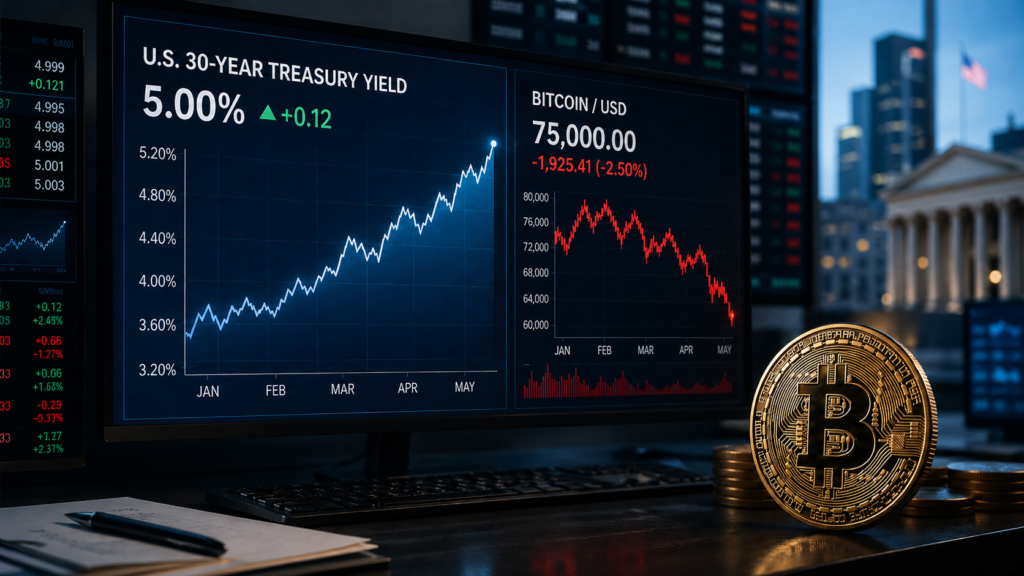
The U.S. 30-year Treasury yield has climbed to 5%, creating a new pressure point for risk assets such as bitcoin.
Long-term bond yields matter because they influence how investors compare risk and reward across markets. When government bonds offer higher returns, some investors become less willing to hold assets that do not generate yield, such as bitcoin, gold, or high-growth technology stocks.
For bitcoin, this does not automatically mean a sharp decline. But it does create a more difficult environment.
Higher Treasury yields can strengthen the case for holding safer, yield-bearing assets, especially when investors are already worried about inflation, oil prices, and a more cautious Federal Reserve.
Why it matters
Bitcoin is often described as a hedge against monetary instability, but in the short term it still behaves like a risk asset.
When yields rise, liquidity conditions usually become tighter. Investors may reduce exposure to speculative assets and move capital toward bonds, cash, or defensive positions.
This is why the 30-year Treasury yield reaching 5% is not just a bond market story. It is also a signal for crypto, equities, and other risk-sensitive assets.
Market context
The pressure comes at a time when markets are paying close attention to inflation expectations, energy prices, and Federal Reserve policy.
If investors believe rates will stay higher for longer, bitcoin may face stronger resistance, especially after periods of rapid price gains.
At the same time, bitcoin’s long-term narrative remains different from traditional assets.
Some investors still see it as a hedge against fiscal risk, currency debasement, and distrust in government debt. That creates a tension: higher yields can hurt bitcoin in the short term, while the reasons behind those higher yields may support bitcoin’s long-term story.
What investors should watch
For crypto investors, the key question is whether bitcoin can continue attracting demand while safer assets offer more attractive returns.
If liquidity weakens, price volatility could increase.
The bigger picture is simple: bitcoin does not move in isolation. Bond yields, inflation, oil prices, and Federal Reserve expectations are all part of the same market environment.
Source
CoinDesk