
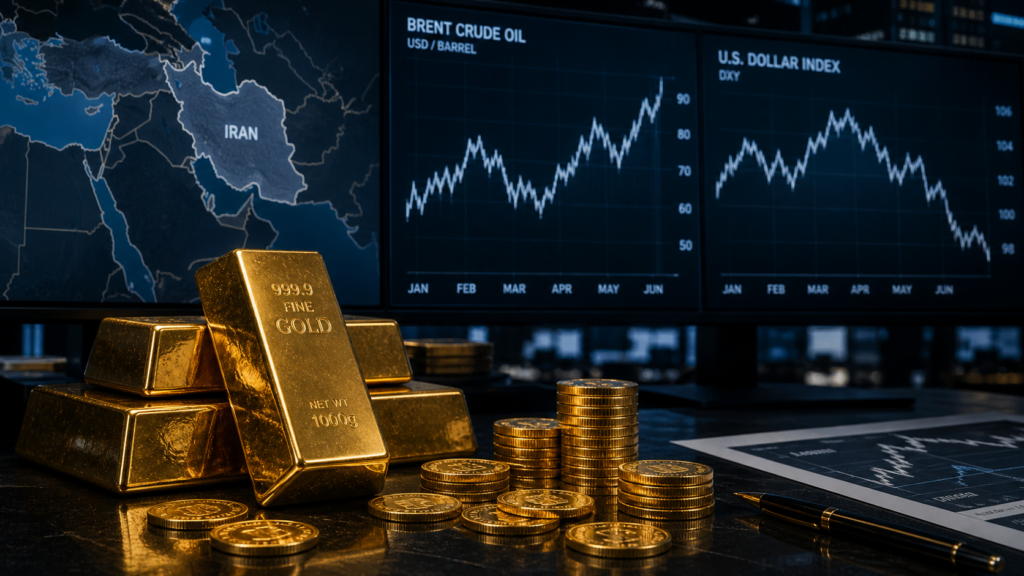
Gold moved higher as investors reacted to new hopes for a possible diplomatic breakthrough between the United States and Iran.
The move came after reports that Iran had submitted a new proposal that could reopen the path toward negotiations. For markets, the story is not only about diplomacy. It is also about oil, inflation, the dollar, and how investors position themselves when geopolitical risk begins to shift.
Gold often benefits during periods of uncertainty. But this move is more complex than a simple safe-haven trade.
Why it matters
Gold is sensitive to several forces at the same time.
When geopolitical tension rises, investors may buy gold as protection. When the U.S. dollar weakens, gold can also become more attractive for buyers using other currencies. And when inflation concerns increase, gold can regain attention as a store of value.
The Iran story touches all three.
A possible U.S.-Tehran deal could reduce some geopolitical pressure in energy markets. If tensions ease, oil prices may come under less pressure. That matters because high oil prices can feed inflation expectations and complicate central bank policy.
At the same time, a weaker dollar can support gold prices, even if geopolitical fear is easing. This is why gold can rise even when markets become slightly more optimistic about diplomacy.
Market context
The bigger market signal is that investors are watching the Middle East not only as a political story, but as a macroeconomic risk.
If tensions around Iran ease, oil markets may calm. That could reduce some inflation pressure and improve risk appetite. But if talks fail or tensions return, investors may quickly move back into defensive assets.
For gold, the key question is whether the market is pricing lower geopolitical risk or higher long-term uncertainty.
Those two forces can point in different directions. Lower geopolitical risk may reduce safe-haven demand. But a weaker dollar, persistent inflation concerns, and doubts about global stability can still support gold.
What investors should watch
The next signals are likely to come from three areas: oil prices, the U.S. dollar, and the tone of any U.S.-Iran negotiations.
If oil falls and the dollar weakens, gold could continue to find support. If the dollar strengthens again or investors become more comfortable with risk assets, gold may face resistance.
The Federal Reserve also remains important. Gold does not pay interest, so higher-for-longer rates can make it less attractive compared with yield-bearing assets. But if markets start to believe inflation risk remains elevated, gold may still benefit.
The larger picture is simple: gold is not moving in isolation.
It is reacting to a combination of diplomacy, energy prices, inflation expectations, and currency movements. The Iranian proposal may be the headline, but the real market story is how quickly geopolitical risk can reshape investor behavior across commodities, bonds, currencies, and safe-haven assets.
Source
Yahoo Finance / Bloomberg
Reuters