
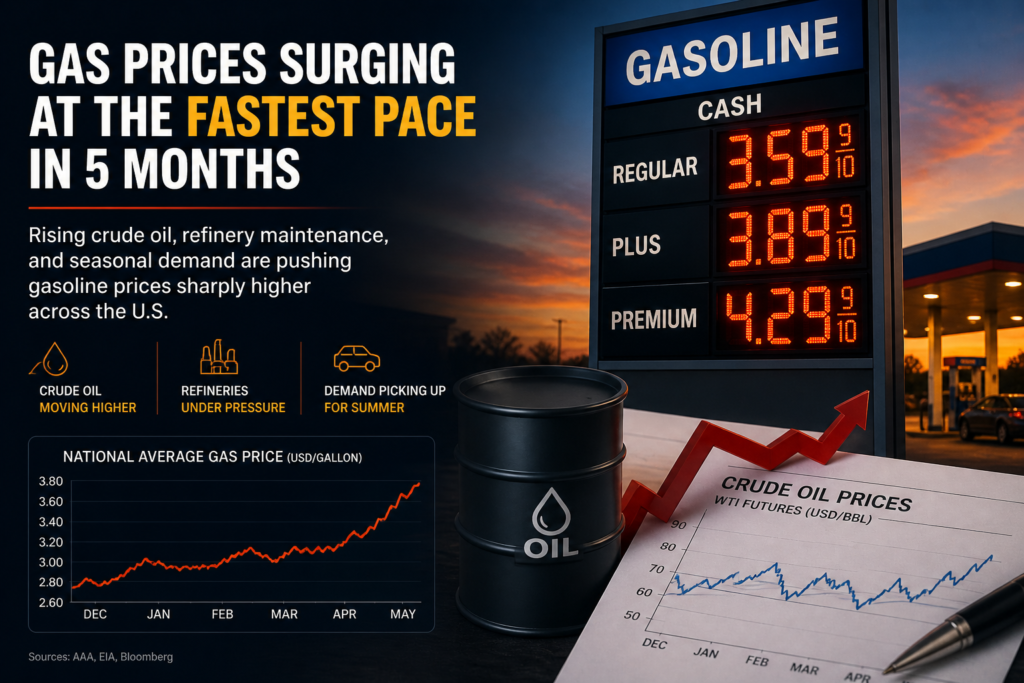
After weeks of higher oil prices, drivers are now seeing the impact directly at the pump. The increase is especially visible in several Midwestern states, where gasoline prices have climbed faster than in much of the rest of the country.
For markets, this is not just an energy story.
Gasoline prices affect inflation expectations, consumer confidence, household budgets, transportation costs, and political sentiment. When fuel becomes more expensive, the pressure does not stay at gas stations. It moves through the broader economy.
Why it matters
Gas prices are one of the most visible forms of inflation.
Many price increases are hidden inside monthly bills, subscriptions, insurance premiums, rent, or grocery baskets. Gas is different. Drivers see the price every day on large signs along the road.
That visibility matters.
When gasoline becomes more expensive, consumers often feel poorer even before official inflation data changes. It can reduce discretionary spending, weaken confidence, and make households more cautious about travel, restaurants, retail purchases, and larger financial decisions.
This is why rising gas prices can quickly affect consumer sentiment.
A higher fuel bill also works like a tax on mobility. In car-dependent regions, especially outside major coastal cities, households often have fewer alternatives. They still need to commute, drive children to school, shop for groceries, and move around their communities.
Market context
The latest surge is tied to a broader energy shock.
Oil prices have climbed as geopolitical tensions increased, particularly around the Middle East and the flow of crude through key shipping routes. When global oil supply looks less secure, gasoline markets react quickly.
But the impact is not distributed evenly.
Some regions face additional pressure from local supply issues, refinery problems, transportation costs, or lower inventories. That is why the Midwest can experience sharper price increases even when the national story is already negative.
For investors, this creates several signals to watch.
Higher gas prices can support energy companies, refiners, and some commodity-linked assets. At the same time, they can hurt consumer-facing sectors if households begin cutting spending. Retail, travel, restaurants, autos, and discretionary goods can all become more vulnerable when fuel costs rise.
The Federal Reserve also matters.
If higher gasoline prices feed inflation expectations, policymakers may become more cautious about cutting interest rates. That can affect bonds, equities, crypto, and other risk assets.
What investors should watch
The first signal is oil.
If crude prices keep rising, gasoline pressure is unlikely to disappear quickly. If oil stabilizes or falls, consumers may get some relief, but prices at the pump can take time to adjust.
The second signal is consumer sentiment.
When households become more pessimistic, markets pay attention. Weak sentiment can translate into weaker spending, slower growth, and more caution from companies.
The third signal is regional pressure.
States with longer driving distances, lower public transit access, and heavier dependence on cars may feel the impact more sharply. That can turn an energy shock into a local economic problem.
The bigger picture is simple: gas prices are not just about gasoline.
They are a daily inflation signal, a consumer confidence signal, and a market risk signal. If prices remain elevated, the pressure may spread from household budgets into broader economic data.
For now, the message is clear. Energy costs are back at the center of the market conversation.
Source
Yahoo Finance / Moneywise
The National News Desk
University of Michigan Consumer Sentiment